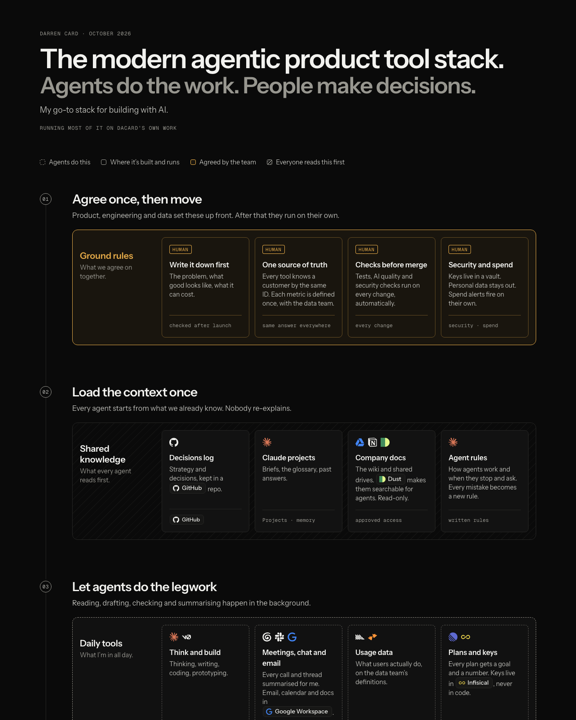
How I build, context first
This note comes from self-directed R&D, the third of six on how I build with AI. Product provides the knowledge, context and data. Context engineering is deciding what an agent reads before it acts, and most of my build time goes there.
The build runs in 7 layers. People decide at the top: write it down first, set the goal and the number, approve data, jobs and spend, then call it landed, watch or stalled. Agents work under that, and they read the brief before they act. When an agent gets something wrong, I ask what context would have prevented it and add that to the agent rules.
Design goes from brief to screen with Claude Design and v0, and production UI comes from the design tokens. Code ships as a PR per change, previews on Vercel, then releases. Checks run before anything reaches customers, including evals on the AI parts.
Go to market sits in the same build. Agents find and enrich accounts in Clay and draft the message. A person chooses who to contact and sends it.
The last layer feeds the next build. Usage, revenue, calls and metrics come back with one ID and one definition each, so the next brief starts from what happened.
Only the top layer is people. That's on purpose.